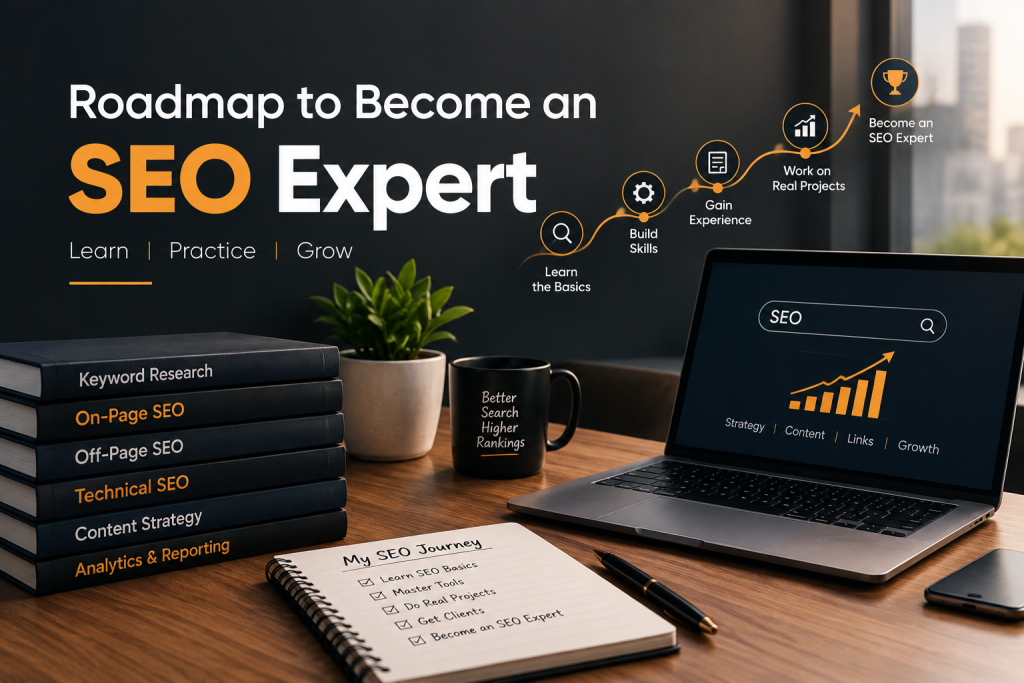
Roadmap to Become an SEO Expert: Skills, Steps, and Career Guide
Becoming an SEO Expert is no longer limited to knowing how to add keywords to a webpage. Search engines have become significantly more sophisticated, and therefore, SEO professionals need to understand search intent, technical optimization, content quality, user experience, analytics, and website authority. For students and beginners, SEO can be an excellent digital marketing skill because businesses across industries depend on organic search visibility to attract relevant traffic and generate leads.
However, becoming an SEO Expert requires more than completing a course or watching a few tutorials. Instead, you need a structured learning roadmap, practical experience, continuous experimentation, and a strong understanding of how search engines discover, understand, and rank web pages.
This guide explains a practical roadmap to become an SEO Expert, from learning the fundamentals to working on real websites and building a professional SEO career.
What Does an SEO Expert Do?
An SEO Expert is a professional who helps websites improve their visibility in search engine results pages (SERPs). The primary objective is to attract relevant organic traffic and improve the website’s ability to achieve business goals such as leads, sales, registrations, or brand awareness.
An SEO Expert may work on several areas, including:
- Keyword research and search intent analysis
- On-page SEO
- Technical SEO
- Content optimization
- Internal linking
- Off-page SEO and link building
- Local SEO
- Competitor analysis
- Website audits
- Google Search Console analysis
- Google Analytics and performance tracking
- Core Web Vitals and page experience
- SEO reporting and strategy development
Therefore, SEO is a combination of technical knowledge, content strategy, data analysis, and continuous optimization.
Why Should You Become an SEO Expert?
SEO remains an important digital marketing channel because users frequently use search engines to find information, products, services, and solutions.
Moreover, organic search can provide long-term visibility when a website consistently publishes useful content and maintains a technically healthy structure. Unlike paid advertising, where traffic generally stops when the advertising budget stops, successful SEO can continue generating organic traffic over time.
For students, SEO also offers multiple career opportunities. You can work as an:
- SEO Executive
- SEO Analyst
- SEO Specialist
- Technical SEO Specialist
- Local SEO Specialist
- Content SEO Specialist
- SEO Consultant
- Digital Marketing Executive
- Freelance SEO Professional
Furthermore, after gaining sufficient experience, you can work with multiple clients or build your own SEO and digital marketing services.
Roadmap to Become an SEO Expert
Becoming an SEO Expert does not happen overnight. SEO includes several areas, from keyword research and content optimization to technical improvements, analytics, and link building. Therefore, the best approach is to learn these skills step by step and apply them through practical projects.
The following roadmap explains what you should learn at each stage and how these skills work together.
Step 1: Understand the Fundamentals of SEO
Step 2: Learn Keyword Research and Search Intent
Step 3: Master On-Page SEO
Step 4: Learn Technical SEO
Step 5: Develop Content SEO Skills
Step 6: Understand Internal Linking
Step 7: Learn Off-Page SEO and Link Building
Step 8: Learn Local SEO
Step 9: Master Google Search Console and Analytics
Step 10: Practice on Real Websites

Step 1: Understand the Fundamentals of SEO
Start by understanding what SEO is, why businesses need it, and how search engines discover and rank webpages.
Search engines such as Google generally work through three major processes:
- Crawling: Search engine bots discover and examine webpages.
- Indexing: The information collected from webpages is analyzed and stored in the search engine’s index.
- Ranking: When someone searches for something, relevant pages are evaluated and displayed in an appropriate order.
At this stage, you should also understand the basic difference between:
- Organic and paid search
- On-page and off-page SEO
- White-hat and black-hat practices
- Do-follow and no-follow links
- Short-tail and long-tail keywords
- Indexable and non-indexable pages
A strong foundation makes advanced SEO concepts much easier to understand later.
Step 2: Learn Keyword Research and Search Intent
Once you understand the basics, move on to keyword research.
Keywords are the words and phrases users type into search engines. However, successful optimization is not simply about choosing keywords with high search volume. You also need to understand why the person is searching for that particular term.
This is known as search intent.
The four common types are:
1) Informational Intent-:
The user wants to learn something.
Example: “How does SEO work?”
2) Navigational Intent-:
The user is looking for a particular website, page, or brand.
Example: “Google Search Console login”
3) Commercial Investigation-:
The user is comparing options before making a decision.
Example: “Best digital marketing course in Hisar”
4) Transactional Intent-:
The user is ready to take an action, such as buying, booking, or registering.
Example:
“Buy SEO course online”
You should learn how to evaluate keywords based on relevance, competition, search intent, and business value, rather than focusing only on search volume.
Also become familiar with primary keywords, secondary keywords, long-tail terms, related phrases, and keyword clusters.
Step 3: Master On-Page SEO
After keyword research, learn how to optimize the content and structure of individual webpages.
On-page SEO focuses on making a page easier for both users and search engines to understand.
Important elements include:
- SEO title
- Meta description
- URL structure
- H1, H2, and H3 headings
- Keyword placement
- Content structure
- Internal linking
- Image optimization
- Alt text
- Readability
- Relevant and related terms
The key is to maintain a natural flow.
For example, if a page is about becoming an SEO professional, you should explain the topic thoroughly instead of repeating the same phrase in every paragraph.
A properly structured page should answer the user’s query clearly while making the information easy to read and navigate.
Step 4: Learn Technical SEO
Technical SEO focuses on the parts of a website that affect crawling, indexing, performance, and overall accessibility.
You do not necessarily need to become a developer, but you should understand how common technical elements work.
Important areas include:
1) XML Sitemap
An XML sitemap helps search engines discover important URLs on a website.
2) Robots.txt
This file provides instructions about which areas of a website crawlers may or may not access.
3) Canonical Tags
Canonical tags help indicate the preferred version of a URL when similar or duplicate pages exist.
4) 301 Redirects
A 301 redirect permanently sends users and search engines from one URL to another.
5) HTTPS
HTTPS provides a secure, encrypted connection between a website and its visitors.
6) Mobile Optimization
Websites should provide a smooth and usable experience across smartphones, tablets, and desktops.
7) Core Web Vitals
Core Web Vitals are user-focused metrics that evaluate aspects such as loading performance, responsiveness, and visual stability.
You should also learn how to identify issues such as broken links, redirect chains, duplicate pages, crawl problems, indexing errors, and slow-loading webpages.
Step 5: Develop Content SEO Skills
Good content is an important part of a successful search strategy. However, publishing a large number of articles does not automatically lead to better rankings.
Content should be created around the user’s needs and should provide clear, useful, original, and trustworthy information.
Learn how to:
- Create content briefs
- Analyze search intent
- Build topic clusters
- Structure headings
- Identify content gaps
- Improve existing articles
- Refresh outdated information
- Add relevant internal links
- Write effective titles and meta descriptions
The goal should always be to solve the user’s problem first. Search optimization should support the content rather than make it difficult to read.
Step 6: Understand Internal Linking
Internal linking is another important skill that beginners often overlook.
An internal link connects one page of your website to another page on the same website. When used properly, these links help visitors discover related information and help search engines understand how different pages are connected.
For example, an article about SEO Basics could link naturally to separate resources covering:
- Keyword Research
- Technical SEO
- On-Page SEO
- Link Building
- Google Search Console
This creates a more organized website structure and allows important pages to be discovered more easily.
Step 7: Learn Off-Page SEO and Link Building
Off-page SEO covers activities that take place outside your website and can contribute to its authority, reputation, and visibility.
One of the most familiar elements is backlink building. A backlink is a link from another website to your website.
However, getting hundreds of links should not be the objective. Relevance, quality, and natural acquisition are more important than quantity.
You should understand:
- Backlink relevance
- Anchor text
- Competitor backlink analysis
- Digital PR
- Guest posting
- Brand mentions
- Natural link acquisition
Avoid manipulative link-building techniques. Low-quality, irrelevant, or artificially created links can create more problems than benefits.
Step 8: Learn Local SEO
If you plan to work with local businesses, Local SEO should be an essential part of your learning journey.
It focuses on helping businesses become more visible when people search for products or services in a particular location.
Important areas include:
- Google Business Profile
- Local keywords
- NAP consistency
- Local citations
- Customer reviews
- Location-specific landing pages
- Local search intent
- Local link opportunities
For example, a search such as “digital marketing course in Hisar” shows clear location-based intent.
Understanding how relevance, location, prominence, reviews, and user experience influence local visibility can help you work effectively with local businesses.
Step 9: Master Google Search Console and Analytics
Learning SEO is not complete without learning how to measure results.
Google Search Console provides valuable information about how your website performs in Google Search. It can help you analyze search queries, clicks, impressions, indexing, page performance, and technical issues.
You should learn to understand metrics such as:
- Impressions
- Clicks
- Click-through rate (CTR)
- Average position
- Search queries
- Indexed pages
- Sitemap status
- Indexing issues
- Core Web Vitals
You should also learn Google Analytics to understand website traffic and user behavior.
For instance, if a webpage receives many impressions but very few clicks, you can investigate whether the title, search intent, content relevance, or SERP competition needs improvement.
This is why data analysis is an important part of making informed SEO decisions.
Step 10: Practice on Real Websites
This is the stage where your theoretical knowledge turns into practical ability.
Reading guides and completing certifications can give you a foundation, but working on real websites helps you understand how SEO actually works.
You can start with:
- A personal WordPress website
- A blog
- A local business website
- A small e-commerce website
- A college or personal project
Start with a basic audit. Identify problems, research relevant keywords, optimize important pages, create useful content, improve internal links, and monitor the results over time.
Most importantly, document your work.
Your portfolio can include:
- SEO audit reports
- Keyword research projects
- Content optimization examples
- Technical SEO improvements
- Before-and-after results
- Organic traffic growth
- Local SEO projects
- Ranking improvements
A practical portfolio demonstrates what you can actually do. This can make your profile stronger when applying for jobs, internships, freelance projects, or working with business clients.
Final Step: Keep Learning and Testing
SEO is not a skill you learn once and then stop. Search engines continuously update their systems, user behavior changes, and new tools and technologies emerge.
Therefore, continue following reliable SEO resources, testing strategies on real websites, analyzing your results, and updating your knowledge.
The most effective way to grow is to learn → implement → measure → improve.
With consistent practice and a structured learning approach, you can gradually develop the technical knowledge, analytical thinking, and practical experience required to build a successful career in SEO.
Tools Every SEO Expert Should Learn
SEO professionals use different tools for research, auditing, tracking, and reporting.
Some important tools include:
Google Search Console
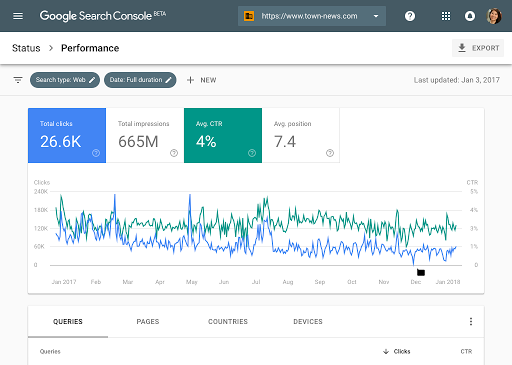
Google Search Console (GSC) is a free tool from Google that helps website owners and SEO professionals understand how their website performs in Google Search. It shows search queries, clicks, impressions, average position, indexing status, and technical issues. SEO experts use it to identify ranking problems and monitor organic search performance.
Google Analytics
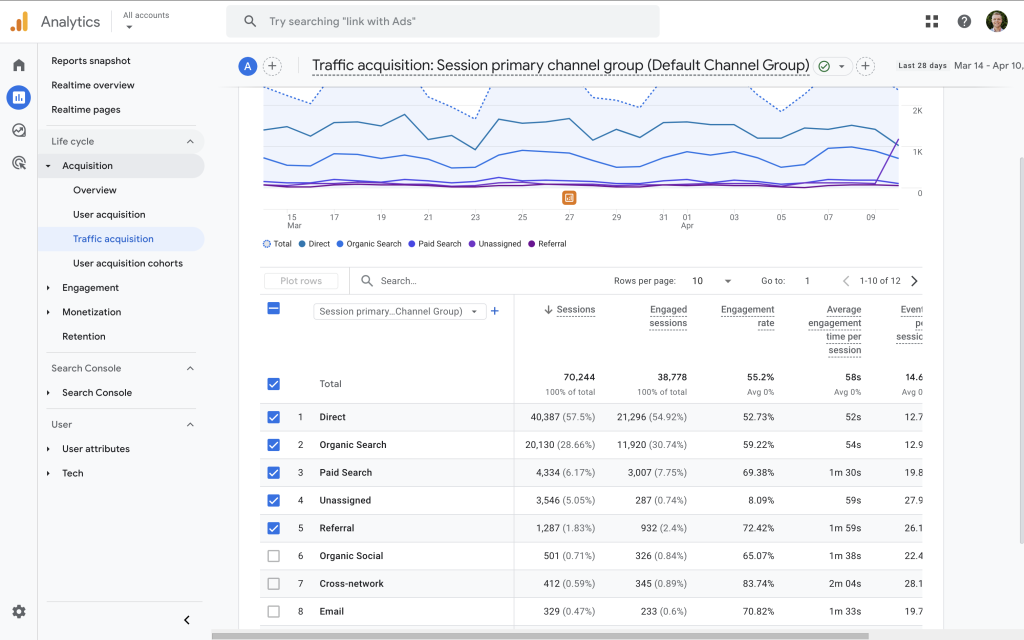
Google Analytics (GA4) helps you understand what users do after they visit your website. It provides information about traffic sources, user engagement, popular pages, conversions, and user behavior. SEO experts can use this data to understand whether organic traffic is actually bringing valuable visitors.
Google Keyword Planner
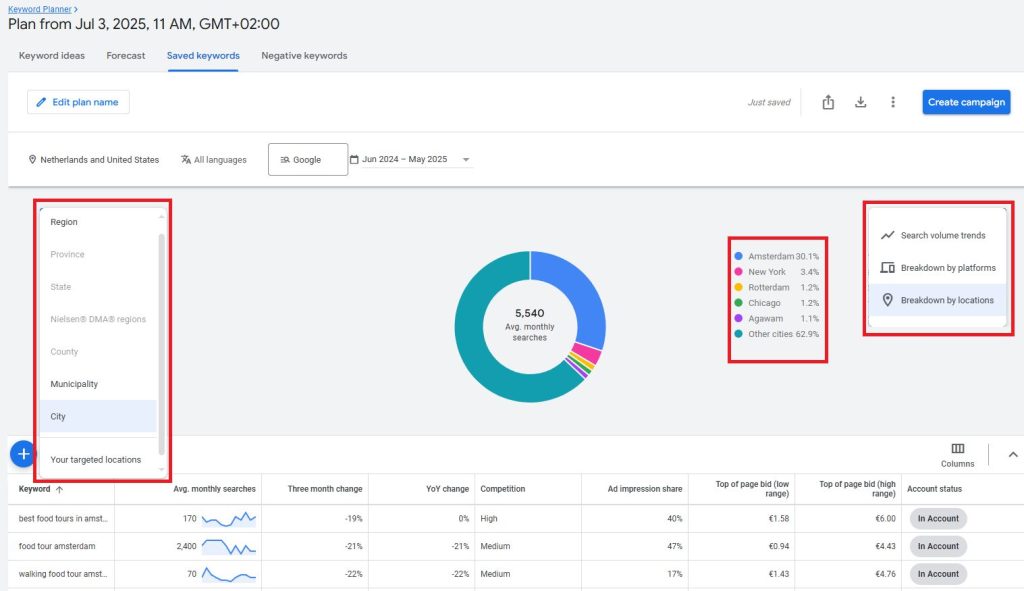
Google Keyword Planner is a Google Ads tool that can also support SEO keyword research. It provides keyword ideas, search volume ranges, competition information, and related search terms. It can help SEO professionals discover relevant keywords that potential customers may use when searching online.
Google Trends
Google Trends is a free tool that shows how search interest for a particular keyword or topic changes over time. It can help SEO professionals identify trending topics, seasonal demand, and differences in search interest between locations. This is especially useful when planning timely content.
Screaming Frog
Screaming Frog SEO Spider is a website crawling tool used mainly for technical SEO audits. It can crawl website pages and identify issues such as broken links, missing title tags, duplicate content, missing meta descriptions, redirect problems, and other technical issues. It is useful for understanding how search engines may access and interpret a website.

Ahrefs
Ahrefs is an advanced SEO platform used for keyword research, competitor analysis, backlink analysis, content research, and website performance analysis. SEO professionals can use it to discover keyword opportunities, study competitors, and understand a website’s backlink profile.
Semrush
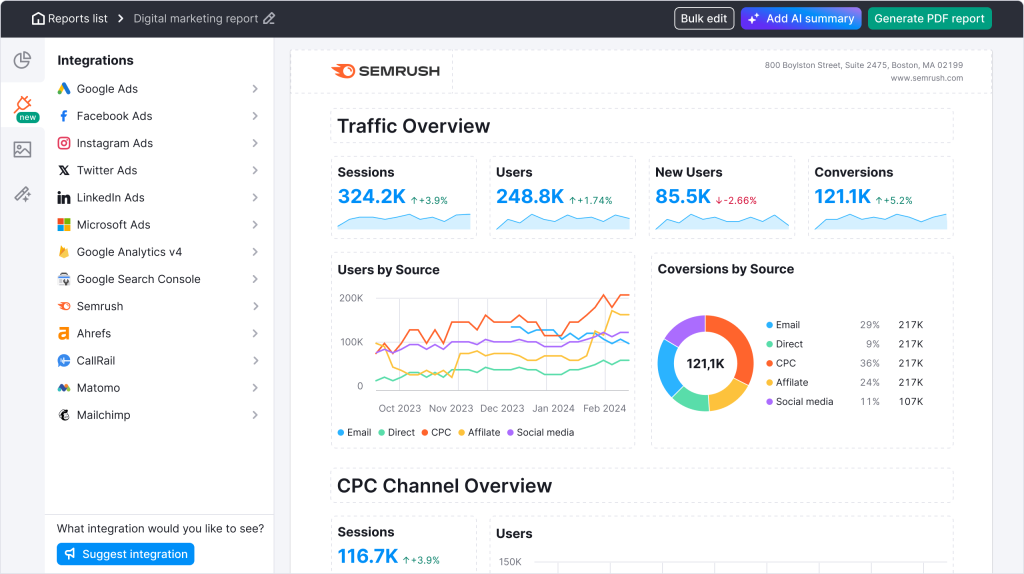
Semrush is an all-in-one digital marketing and SEO platform. It provides tools for keyword research, competitor research, backlink analysis, site audits, rank tracking, and content optimization. It helps SEO professionals collect different types of data and use them to develop and improve SEO strategies.
PageSpeed Insights
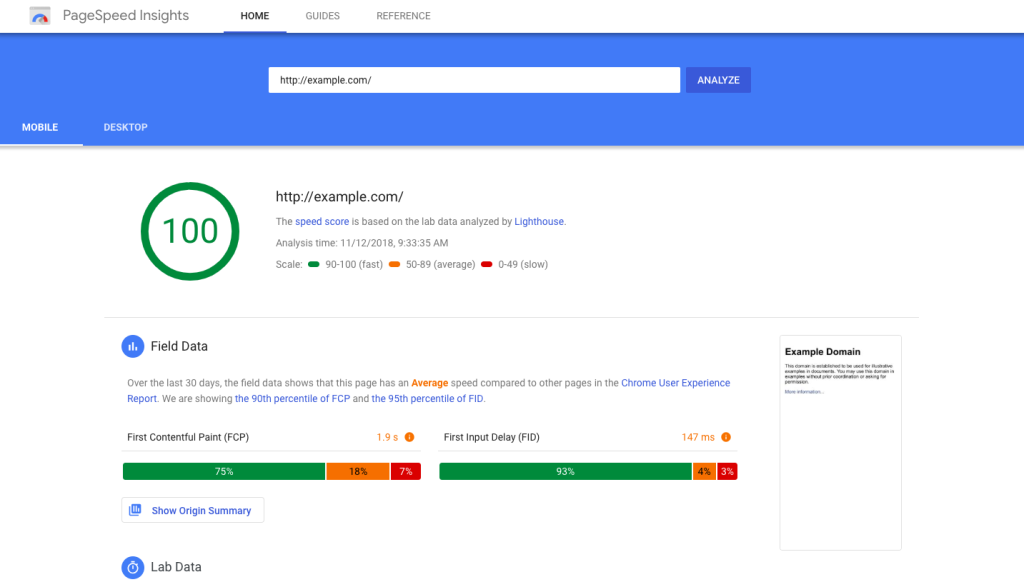
Google PageSpeed Insights is a tool for checking the performance and user experience of webpages. It provides performance data and highlights areas that may need improvement, such as loading speed, image optimization, and other technical factors. SEO professionals use it to identify performance issues that can affect user experience.
Yoast SEO
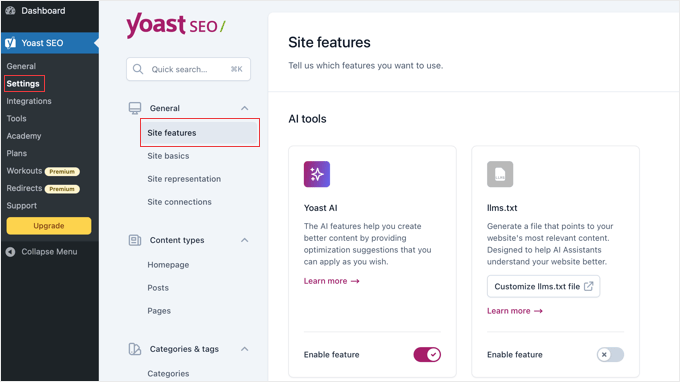
Yoast SEO is a popular WordPress SEO plugin that helps with several on-page SEO tasks. It can assist with elements such as SEO titles, meta descriptions, XML sitemaps, canonical URLs, and content optimization checks. It makes basic SEO implementation easier for WordPress websites.
Important Point
SEO tools are not a replacement for SEO knowledge. They provide data, reports, and recommendations, but an SEO expert needs to understand what that data means and decide what action should be taken. The real skill is knowing how to analyze the data and turn it into an effective SEO strategy.
How HIDM( Hisar Institute of Digital Marketing) Can Help You Build SEO Skills
For students who want structured and practical digital marketing training, Hisar Institute of Digital Marketing (HIDM) offers an AI-integrated Digital Marketing Course that covers important areas of digital marketing, including SEO.
The course is designed to help learners understand digital marketing concepts while gaining practical exposure to areas such as SEO, SEM, Social Media Marketing, Google Ads, Meta Ads, and AI tools.
For an aspiring SEO Expert, structured learning can be useful because it provides a learning path instead of requiring students to depend entirely on scattered online resources.
Moreover, practical and live-project exposure can help students understand how SEO works in real business situations. Students can learn how keyword research, content optimization, technical SEO, website analysis, and performance tracking work together as part of a complete digital marketing strategy.
HIDM’s AI-integrated approach is also relevant because AI tools are increasingly becoming part of modern marketing workflows. Nevertheless, AI should support research, ideation, analysis, and productivity rather than replace SEO strategy and human judgment.
How Long Does It Take to Become an SEO Expert?
There is no fixed timeline for becoming an SEO Expert because SEO is a continuously evolving field. Search engine algorithms, SEO practices, tools, and user behavior keep changing. Therefore, becoming an expert is not just about completing a course or reading SEO concepts. It requires continuous learning, testing, analysis, and practical experience.
However, a beginner can build a strong SEO foundation within 3 to 4 months if they study consistently and work on real websites. The timeline can vary depending on how much time a person spends learning and practicing.
Month 1: SEO Fundamentals and Keyword Research
During the first month, beginners should focus on understanding the basics of SEO. This includes learning how search engines work, how crawling and indexing happen, what ranking factors are, and why SEO is important for websites.
Keyword research should also be introduced at this stage. You should learn how to find relevant keywords, understand search intent, and identify keywords that match the target audience.
Practical work:
Choose a sample website or blog and create a basic keyword list for its products, services, or content topics.
Month 2: On-Page SEO and Content SEO
In the second month, the focus should move toward On-Page SEO and content optimization. You can learn how to optimize title tags, meta descriptions, headings, URLs, images, internal links, and website content.
You should also understand how to create useful content based on search intent instead of simply adding keywords repeatedly. Internal linking should be practiced to help users and search engines discover related pages.
Practical work:
Optimize a few existing website pages or blog posts and improve their titles, headings, content structure, internal links, and meta information.
Month 3: Technical SEO, Search Console, and Analytics
Once you understand on-page optimization, you can start learning Technical SEO. This includes topics such as website crawling, indexing, XML sitemaps, robots.txt, redirects, canonical URLs, mobile usability, and website performance.
At this stage, learning Google Search Console and Google Analytics is also important. These tools help you understand search performance, traffic, user behavior, indexing issues, and other website data.
Practical work:
Connect a website to Google Search Console, monitor its search performance, check indexing issues, and analyze its organic traffic and user behavior.
Month 4: Off-Page SEO, Local SEO, and SEO Audits
In the fourth month, you can move toward Off-Page SEO and Local SEO. Learn how backlinks work, how to evaluate backlink quality, and how online authority can be developed naturally.
You can also learn Local SEO concepts such as Google Business Profile optimization, local keywords, citations, reviews, and location-based search visibility.
At this stage, you should start performing complete SEO audits to identify technical, on-page, content, and off-page issues.
Practical work:
Perform an SEO audit of a real website and prepare a report containing the problems you found and practical recommendations for improvement.
After 4 Months: Real Projects and Specialization
After learning the fundamentals, your journey does not end. This is where you should focus more on real projects, experimentation, and portfolio development.
Work on different types of websites and track what happens after implementing SEO changes. Analyze rankings, traffic, clicks, conversions, and other performance data. Over time, you can specialize in areas such as Technical SEO, Local SEO, E-commerce SEO, Content SEO, or International SEO.
The Most Important Factor: Consistent Practice
The exact time required to become an SEO Expert depends on your learning speed, practical experience, and consistency. Spending a few focused hours every week working on real websites can be more valuable than consuming large amounts of theoretical content without implementation.
The best approach is simple: Learn → Implement → Analyze → Improve → Repeat.
Common Mistakes Beginners Should Avoid
Many beginners make mistakes because they focus only on rankings.
Avoid these common problems:
- Keyword stuffing
- Copying competitors’ content
- Creating low-value AI-generated content
- Buying poor-quality backlinks
- Ignoring technical SEO
- Targeting keywords without understanding intent
- Writing only for search engines
- Ignoring mobile experience
- Not tracking performance
- Expecting immediate rankings
Instead, focus on creating useful content, maintaining technical website health, understanding users, and making decisions based on reliable data.
Career Opportunities After Learning SEO
Once you develop practical SEO skills, several career paths become available.
You can start as an SEO Executive or Digital Marketing Executive and gradually move toward roles such as SEO Specialist, SEO Analyst, Technical SEO Specialist, or SEO Consultant.
Furthermore, SEO skills can support freelance work. You can provide services such as:
- SEO audits
- Keyword research
- On-page SEO
- Technical SEO
- Local SEO
- Content optimization
- Monthly SEO management
- SEO reporting
With experience, you can also specialize in a particular area, such as technical SEO, e-commerce SEO, local SEO, or enterprise SEO.
Final Thoughts: Start Your Journey to Become an SEO Expert
The journey to become an SEO Expert is not about memorizing hundreds of SEO terms. Instead, it is about understanding how search engines work, identifying what users need, optimizing websites effectively, analyzing data, and continuously improving your strategy.
Start with the fundamentals. Then move toward keyword research, on-page SEO, technical SEO, content optimization, off-page SEO, Local SEO, analytics, and real-world projects. Most importantly, keep testing your knowledge on actual websites.
SEO changes continuously because search engines, user behavior, technology, and content ecosystems continue to evolve. Therefore, a successful SEO professional must keep learning and adapting.
For students looking for structured digital marketing education, Hisar Institute of Digital Marketing (HIDM) can be considered as a learning option through its AI-integrated Digital Marketing Course, which provides exposure to SEO and other important digital marketing disciplines.
Ultimately, becoming an SEO Expert is a gradual process. Learn → Practice → Analyze → Optimize → Repeat. The more real projects you work on, the stronger your understanding becomes and the more confidently you can build a professional career in SEO.