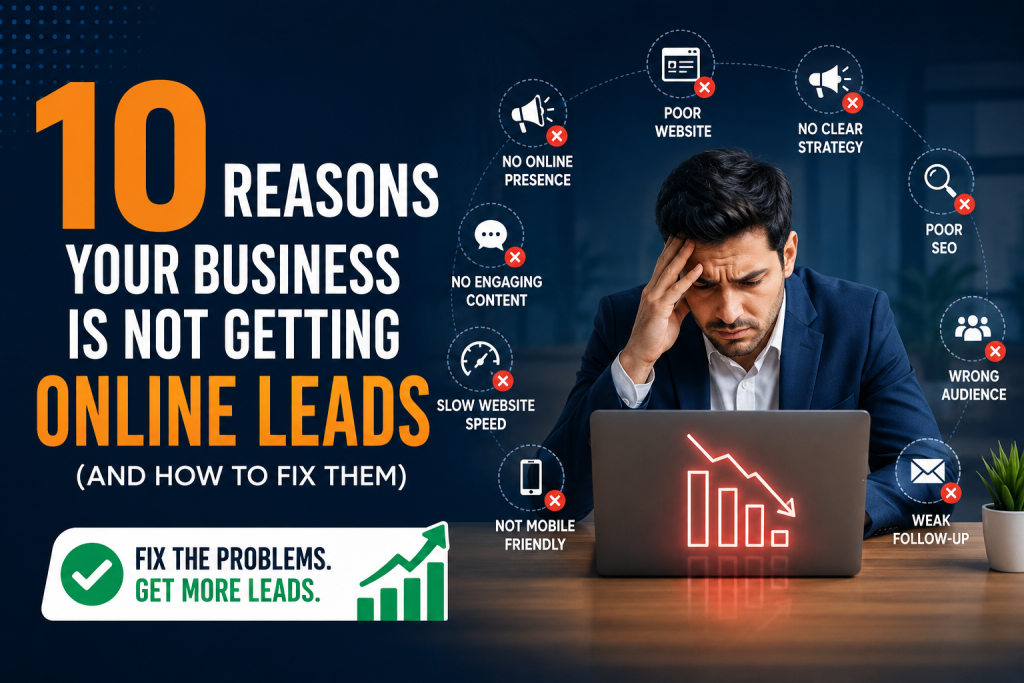
Business Is Not Getting Online Leads? Here’s Why
Business Is Not Getting Online Leads is one of the biggest problems faced by small businesses, startups, local companies, and even established brands in 2026. Although many business owners invest in websites, social media pages, and online advertisements, they still struggle to generate quality inquiries. As a result, they begin to believe that digital marketing does not work. However, the real issue is usually not digital marketing itself but the strategy behind it.
Today, customers search on Google before making a purchase. They compare businesses, read reviews, visit websites, and finally contact the company they trust the most. Therefore, if your business is not getting online leads, there are specific reasons behind it. Fortunately, each of these problems can be solved with the right digital marketing strategy.
In this blog, we will discuss the 10 biggest reasons your business is not getting online leads and explain practical solutions that can help you attract more customers, improve your online visibility, and increase your sales.
1. Your Website Is Not SEO Optimized
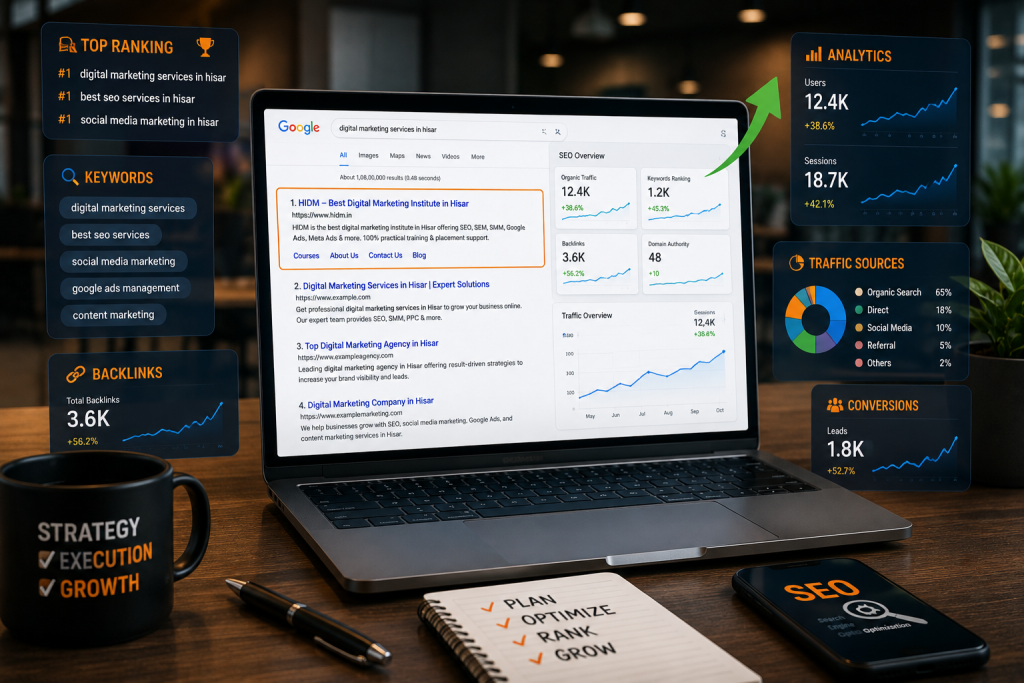
One of the biggest reasons your business is not getting online leads is poor Search Engine Optimization (SEO). Even if your website looks attractive, it will not generate leads if people cannot find it on Google. Most customers never visit the second page of search results. Therefore, if your website is ranking too low, potential customers are simply choosing your competitors instead. Moreover, missing keyword optimization, slow indexing, poor internal linking, and weak content further reduce your chances of appearing in search results. By implementing a strong SEO strategy, targeting relevant keywords, publishing high-quality content, and optimizing every important page, your website can gradually improve its rankings and attract more organic traffic.
2. Your Website Loads Too Slowly
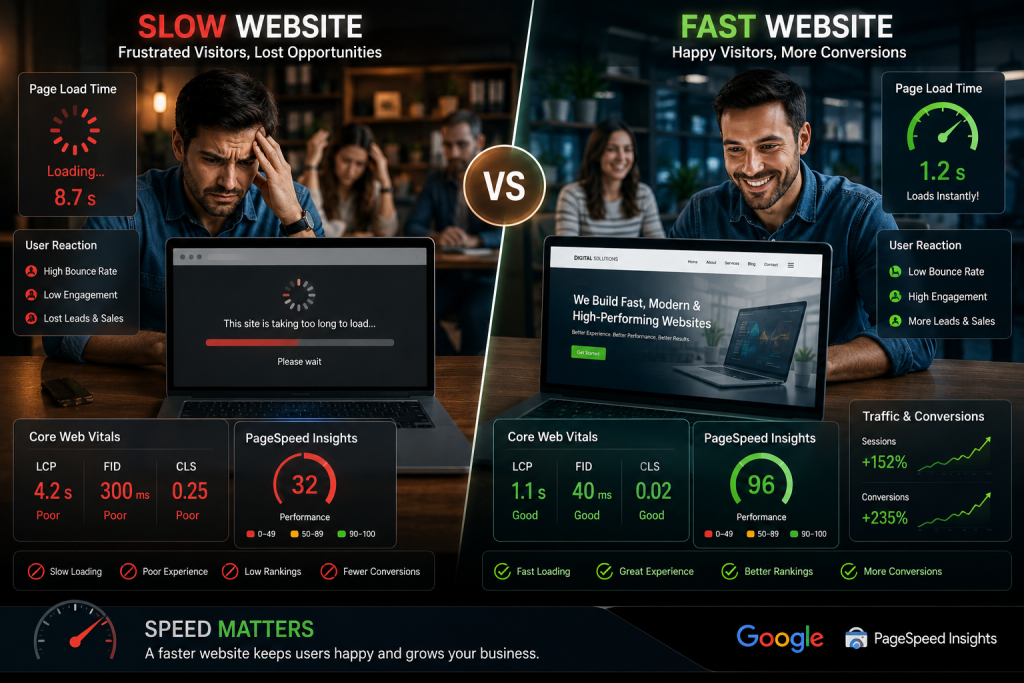
Website speed directly affects both user experience and search engine rankings. When visitors have to wait several seconds for a page to load, many of them leave immediately. Consequently, Google also considers slow websites less valuable for users. Large image files, poor hosting, unnecessary plugins, and unoptimized code are common reasons for slow loading speeds. Therefore, compressing images, improving hosting quality, reducing unnecessary scripts, and optimizing Core Web Vitals can significantly improve performance. A faster website keeps visitors engaged longer and increases the chances of converting them into valuable leads.
3. Your Website Does Not Build Trust
Visitors only submit their information when they trust a business. However, many websites fail to establish credibility. Missing testimonials, outdated designs, broken pages, poor contact information, and the absence of security certificates make customers hesitant. Furthermore, businesses that do not display client reviews, certifications, awards, or successful projects often lose potential customers. Adding genuine testimonials, trust badges, professional branding, and clear business information helps visitors feel confident. As trust increases, lead generation naturally improves.
4. You Are Targeting the Wrong Audience
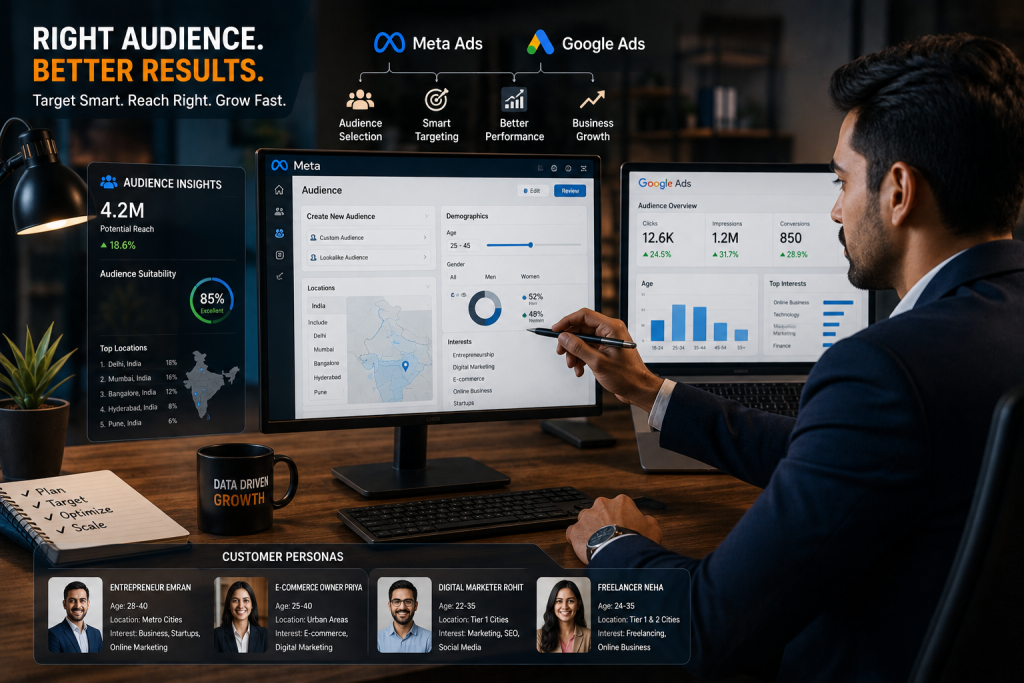
Even the best marketing campaign will fail if it reaches the wrong audience. Many businesses advertise their services without clearly defining who their ideal customer is. As a result, website traffic increases, but qualified leads remain low. Instead of targeting everyone, businesses should focus on customer demographics, interests, buying behavior, location, and search intent. Additionally, understanding customer pain points allows businesses to create more relevant marketing messages. Proper audience targeting ensures that your marketing budget reaches people who are actually interested in your products or services.
5. Your Content Does Not Solve Customer Problems
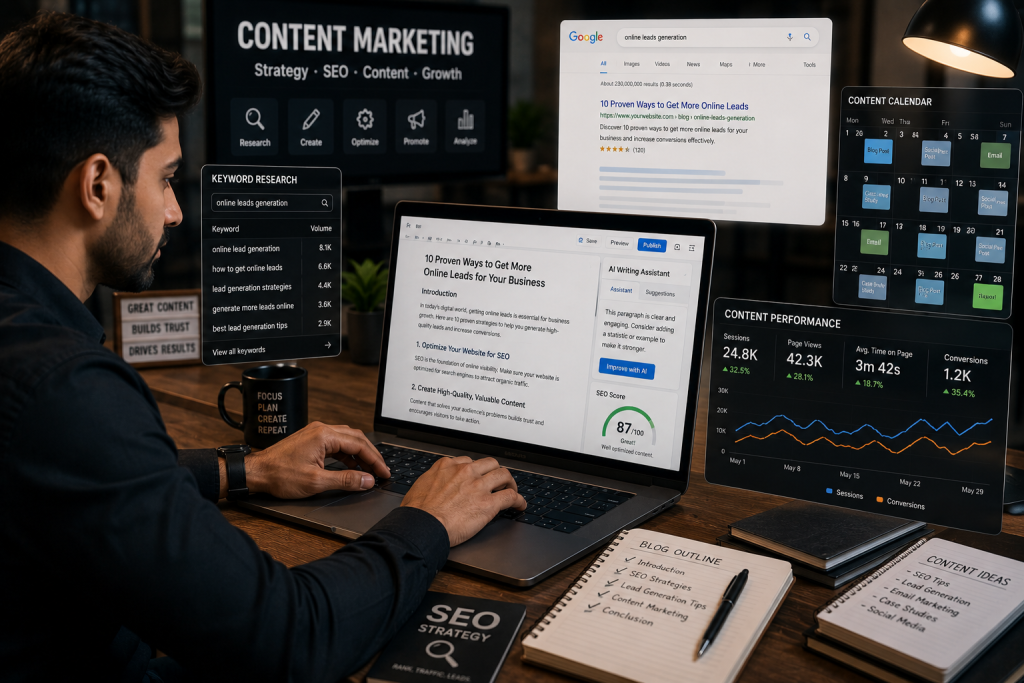
Content marketing is no longer about publishing random articles. Instead, successful businesses create valuable content that answers customer questions and provides practical solutions. If your blog posts only promote your services without educating readers, visitors are less likely to trust your expertise. High-quality blogs, detailed guides, case studies, FAQs, and informative videos position your business as an industry expert. Consequently, readers spend more time on your website, engage with your content, and become more likely to contact your business.
6. You Are Ignoring Local SEO
Many businesses depend on customers from their local area, yet they ignore Local SEO completely. Without optimizing your Google Business Profile, collecting customer reviews, and using location-based keywords, your business becomes difficult to find in local searches. Since many customers search using phrases like “digital marketing company near me” or “SEO services in Hisar,” businesses that invest in Local SEO usually receive more inquiries. Optimizing local listings, maintaining accurate business information, and encouraging satisfied customers to leave positive reviews can dramatically increase local lead generation.
7. Your Social Media Strategy Is Weak
Simply posting images every few days is no longer enough. Today’s customers expect educational, engaging, and valuable content before making purchasing decisions. Therefore, businesses should consistently publish informative reels, customer success stories, industry updates, tips, behind-the-scenes content, and interactive posts. Moreover, social media profiles should always direct users toward the website or landing pages. A strong social media presence builds brand awareness, increases trust, and generates qualified website visitors who are more likely to become leads.
8. Your Website Has Poor Call-to-Actions
Many websites receive visitors but fail to convert them because they do not guide users toward the next step. If visitors cannot easily find contact forms, phone numbers, WhatsApp buttons, or inquiry options, they simply leave the website. Effective call-to-action buttons such as “Request a Free Consultation,” “Get a Free Quote,” or “Talk to Our Expert Today” encourage visitors to take immediate action. Furthermore, placing CTAs strategically throughout the website rather than only at the bottom significantly improves conversion rates.
9. You Are Not Using Paid Advertising Correctly
Google Ads and Meta Ads can generate excellent results when managed properly. However, many businesses waste their advertising budget because they target broad audiences, use weak ad copy, or send visitors to poorly optimized landing pages. Consequently, clicks increase while conversions remain low. Successful advertising campaigns require keyword research, audience analysis, persuasive ad creatives, optimized landing pages, and continuous performance monitoring. By refining campaigns regularly, businesses can generate higher-quality leads while reducing advertising costs.
10. You Are Not Tracking Your Marketing Performance
Many business owners invest in digital marketing without measuring the results. Therefore, they never know which strategies are generating leads and which ones are wasting money. Tools like Google Analytics, Google Search Console, Meta Pixel, and conversion tracking provide valuable insights into customer behavior. Businesses can identify top-performing pages, traffic sources, conversion rates, and user journeys. With accurate data, marketing decisions become more effective, resulting in better lead generation and higher returns on investment.
How Professional Digital Marketing Services Help Generate More Leads
If your business is not getting online leads, working with experienced digital marketing professionals can make a significant difference. A professional team begins by analyzing your website, identifying technical SEO issues, understanding your target audience, and developing a customized marketing strategy. They optimize your website, improve Google rankings, create valuable content, manage advertising campaigns, strengthen your social media presence, and continuously monitor performance. As a result, your business receives more qualified traffic, stronger brand visibility, and a higher number of genuine inquiries that can eventually become paying customers.
Final Thoughts
If your business is not getting online leads, the solution is not to stop digital marketing. Instead, it is important to identify the gaps in your current strategy and improve them systematically. From SEO optimization and website speed to content marketing, Local SEO, social media, paid advertising, and conversion optimization, every factor plays an essential role in lead generation. Businesses that consistently improve these areas usually experience better online visibility, increased customer trust, and sustainable business growth.
If you want your business to attract more qualified leads, rank higher on Google, and increase sales, investing in professional digital marketing services is one of the smartest decisions you can make. The online marketplace is becoming more competitive every year, and businesses that adapt to modern digital marketing strategies will always have a stronger advantage over those that do not.